Employee onboarding is not just a first-week HR task. It is the foundation for how a new hire understands your culture, learns your systems, builds confidence, and decides whether they can see a future in your business.
When onboarding is unclear, inconsistent, or left to busy managers to improvise, the cost is rarely visible on one budget line. It shows up as slow productivity, repeated training, avoidable attrition, weaker engagement, and a hiring cycle that never seems to end.
That is why an employee onboarding LMS matters. A structured learning platform gives every new starter a clear path, gives managers visibility, and helps the business create an LMS onboarding process that can be used, measured, and improved again and again. For a practical platform view, see our guide to an LMS for employee onboarding.
Key takeaway: poor onboarding is expensive because it wastes the investment you have already made in recruitment. A structured onboarding LMS turns that investment into faster time-to-productivity, stronger employee retention, and clearer training records.
Listen to the Podcast: Why One in Five New Hires Quit Early
Prefer to listen? This podcast version explains why poor onboarding causes early employee turnover, how hidden onboarding costs build up, and how an employee onboarding LMS can improve retention, productivity and manager visibility.
What this episode covers- Why new hires quit early
- The hidden cost of poor onboarding
- How onboarding affects retention and productivity
- How an employee onboarding LMS creates a structured journey
- What managers should track during the first 30, 60 and 90 days
- How CreateLMS supports repeatable onboarding workflows
Podcast Transcript
Transcript coming soon.
The hidden cost of poor onboarding
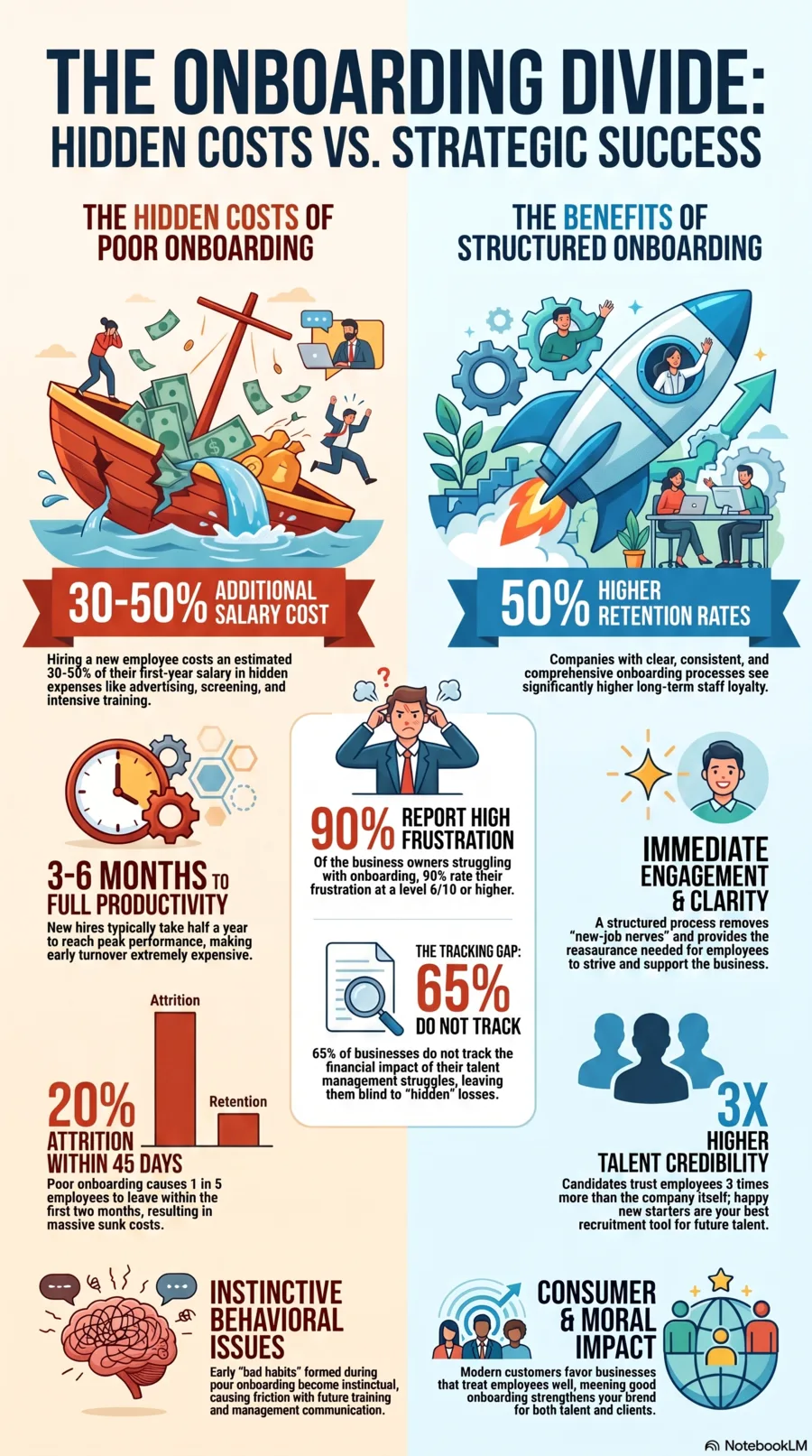
At a recent CreateLMS event, business owners were asked about their biggest pain, cost, or time frustration in talent management and development. Nearly 17% pointed to onboarding as their biggest struggle, and nearly 90% of those people rated their frustration at 6 out of 10 or higher.
The bigger warning sign was the tracking gap: more than 65% said they do not track the cost or impact of onboarding, training, and talent management problems. In other words, many businesses know onboarding hurts, but they cannot yet see the full financial impact.
Recruitment costs include advertising, screening, interviews, background checks, manager time, equipment, administration, and training. Training is often the biggest contributor, especially when new people need role-specific knowledge, compliance guidance, product knowledge, system access, and manager support before they can work confidently.
That is before you count the lost productivity while a role is empty, the reduced productivity while a new hire ramps up, and the extra load carried by colleagues while the new person is still learning.
Why new hires leave before they become productive
One of the most damaging onboarding failures is early attrition. If a new hire leaves in the first few weeks, the business has paid for recruitment, setup, training time, and manager attention without getting the long-term value of that investment.
New employees usually leave early for practical, emotional, and operational reasons. They feel unclear about what good looks like. They are unsure how to ask basic questions. Their systems are not ready. Their training feels scattered. They cannot see how the role connects to the wider business.
Those first impressions matter. The onboarding process shapes how new starters instinctively respond to tasks, managers, communication, and future training. If the early experience is confused, future learning has to undo that confusion before it can build confidence.
What a structured onboarding LMS fixes
A structured onboarding LMS gives new hires a repeatable journey instead of a loose collection of meetings, documents, and reminders. The goal is not to replace human support. The goal is to make human support easier, better timed, and more consistent.
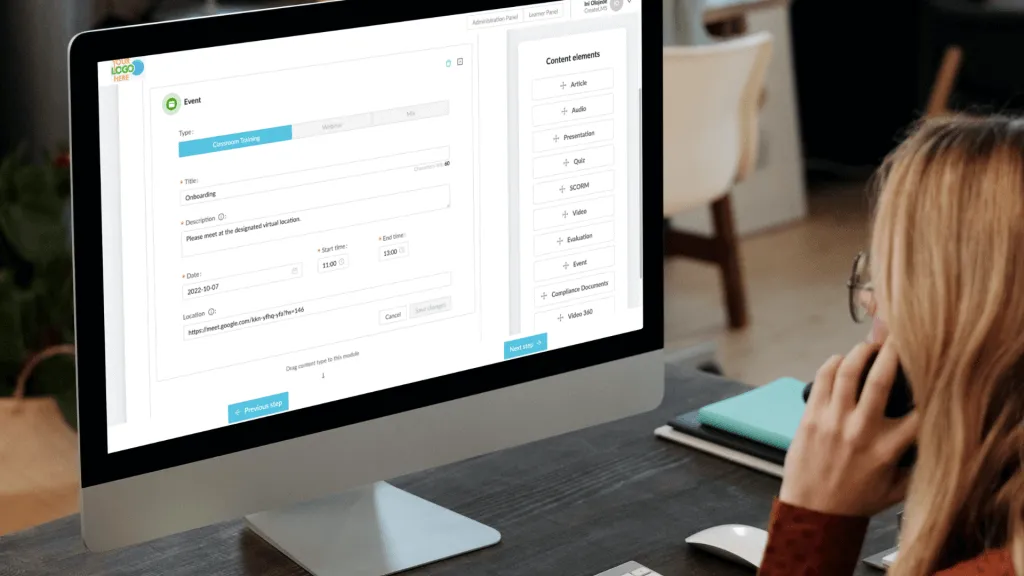
With CreateLMS, an onboarding pathway can include role-based learning tracks, welcome content, policy sign-off, manager checkpoints, buddy tasks, surveys, pulse checks, and progress reporting. That turns onboarding from a memory-based process into a measurable workflow.
A practical onboarding LMS checklist
If you want to create an LMS onboarding journey that improves retention, start with the moments where new hires most often get stuck.
- Before day one: send welcome content, explain the first week, confirm equipment, and make sure access is ready.
- First day: give the new hire a simple learning path, clear contacts, a buddy, and small achievable wins.
- First week: deliver core role training, safety/compliance learning, product knowledge, and team context in manageable steps.
- First 30 days: track progress, ask for feedback, and identify whether the employee is blocked, overloaded, or unclear.
- First 90 days: connect onboarding to performance, skills development, and ongoing employee engagement.
This is where businesses that want to create an LMS, build their own LMS onboarding process, or improve an existing learning platform can win quickly. The content can be built once, improved from real feedback, and used repeatedly across remote, hybrid, and office-based teams.
The retention benefit of better onboarding
Strong onboarding helps new employees feel prepared, supported, and reassured. It gives them clarity in the exact period when nerves are highest and confidence is still fragile.
Companies with clear, consistent, and comprehensive onboarding processes generally see stronger long-term staff loyalty. The event material highlighted a 50% higher retention rate for organisations that treat onboarding as a structured process rather than a one-off welcome exercise.
That improved retention also supports employer branding. Candidates trust employees more than company messaging when deciding what a business is really like. Happy new starters become credible advocates for future talent, while confused new starters can quietly damage your reputation before you even see the cost.

How CreateLMS supports employee onboarding
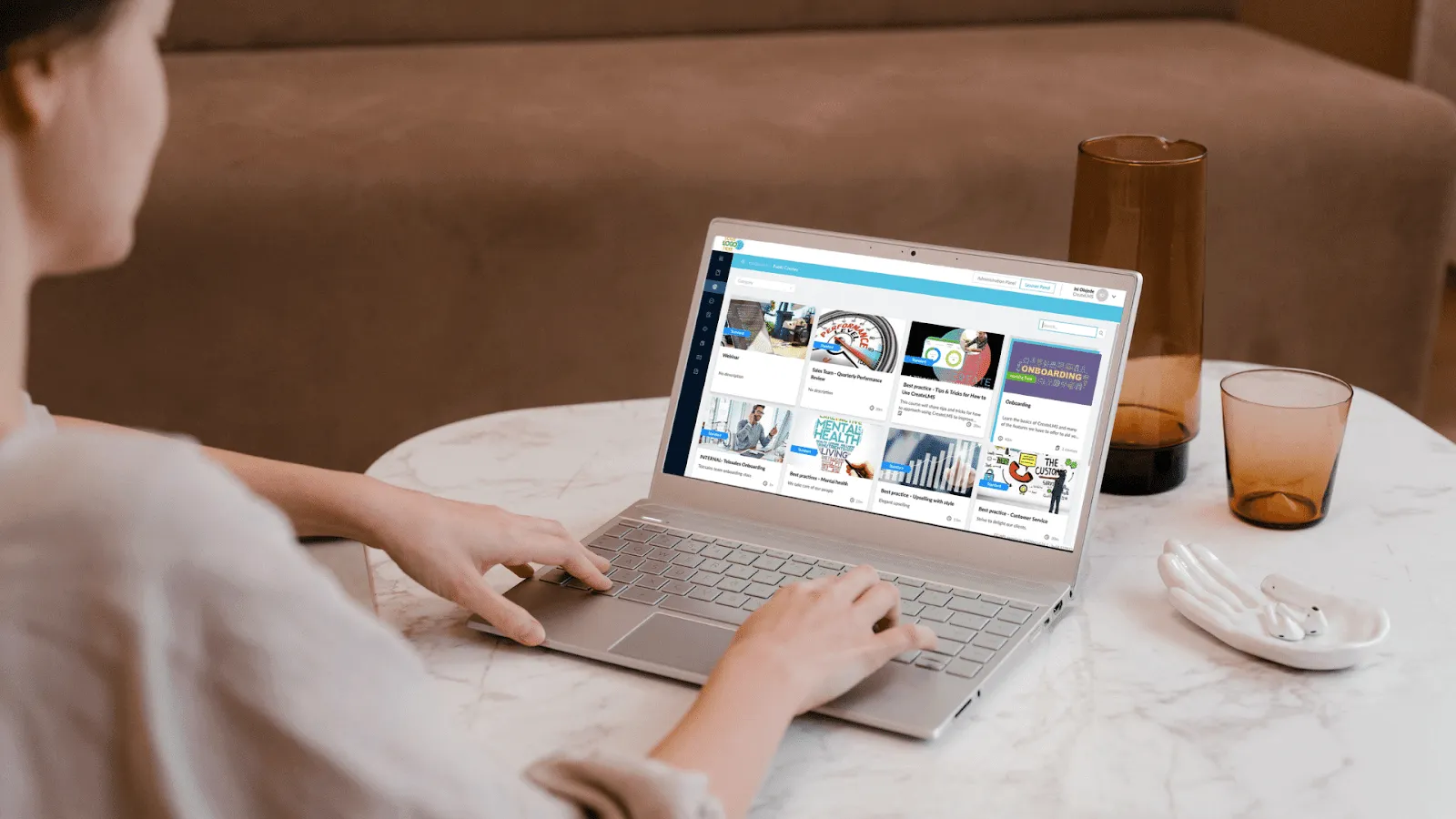
CreateLMS helps organisations turn onboarding into a learning workflow that can be tracked and improved. Instead of relying on scattered documents and manager memory, you can build structured onboarding tracks, assign learning at the right time, and see who is progressing. The Create LMS LXP tour shows how this kind of guided learning experience works in practice.
A good LMS feature set should help with more than content delivery. It should give managers evidence, make follow-up easier, and show where new hires need support before frustration becomes resignation.
For teams comparing LMS pricing, onboarding is one of the easiest places to build a business case. If better onboarding prevents even a small number of early exits, the platform can protect recruitment spend, reduce manager burden, and improve productivity faster than many businesses expect.
What to measure
If 65% of businesses are not tracking onboarding impact, measurement is a major opportunity. You do not need a complicated dashboard to start. Track the metrics that show whether new starters are moving from uncertainty to contribution.
- Time to first meaningful task completion.
- Time to role confidence or manager-rated effectiveness.
- Training completion by week one, week four, and week twelve.
- New hire feedback scores and common blockers.
- Early attrition within 45 days, 90 days, and 6 months.
- Manager time spent repeating the same onboarding explanations.
Once these signals are visible, your onboarding LMS becomes more than a content library. It becomes a retention and productivity system.
The bottom line
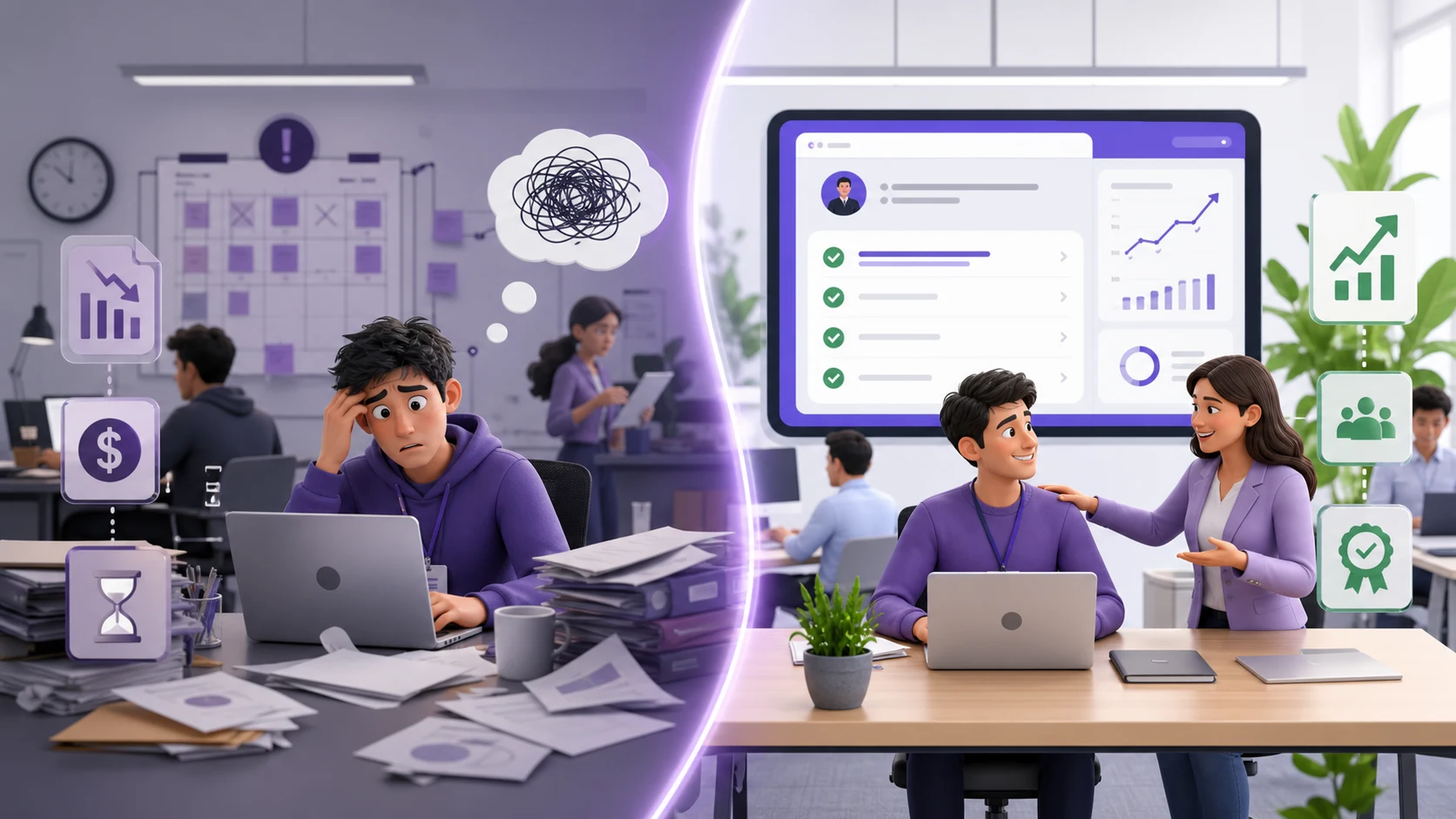
Poor onboarding is expensive because it hides inside other problems: slow productivity, repeated training, disengagement, hiring pressure, and early turnover. Structured onboarding solves the same problem from the other direction. It gives people clarity, gives managers evidence, and gives the business a repeatable process.
If you already know onboarding is costing time, money, or talent, now is the moment to make it visible. Build a clear onboarding journey, connect it to your learning platform, track the experience, and keep improving it.
Want to improve onboarding retention with a structured employee onboarding LMS? Talk to an L&D expert.